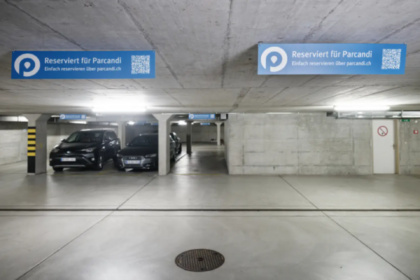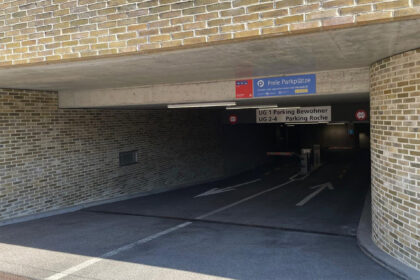
In urban areas, the mobility of the future meets the built structures of the present, but also those of the past centuries. The development of urban space must meet current and future needs: good charging infrastructure, easy access to points of interest and, last but not least, the promotion of shared mobility. The space used for all forms of mobility competes with space for leisure activities, living, shopping and working. This is precisely where Parcandi comes in. With our operating system for individual mobility, we simplify and flexibilize parking in urban areas.
Parcandi allows different users to use the same parking space throughout the day, making more efficient use of the available space and increasing the return on investment. In the city of Basel, for example, Parcandi currently manages 309 parking spaces; the space saved in Basel alone is equivalent to half a football pitch. The savings of the more than 50 Parcandi locations are many times greater.
The integrated traffic guidance system and the dynamic pricing models optimize the flow of traffic, for example by reducing search traffic.
Digital rental contracts and automatic access with license plate recognition offer tenants in residential complexes maximum convenience. Visitors to the neighborhood can also park easily and spontaneously. Dynamic parking space management pays off for the property owner, as the intensification increases revenue by around 35 percent. The Côté Gare district in Bussigny, a suburb of Lausanne, shows how such a concept was integrated with Parcandi from the very beginning of the implementation of an area. The principle also works for companies: Flexible use instead of rigid rental agreements and waiting lists means that parking spaces can be used by different employees every day. Employees can reserve a parking space at all locations and thus have planning security. Parcandi supports urban planners, real estate developers and architects in the future-oriented design of their projects.