A dominant design is the smallest common solution to a universally known and solvable problem:
- For more than 100 years, cars had (almost) exclusively combustion engines – batteries were for toys
- Telephones had a cable for 100 years, cell phones always had buttons for over 20 years
- Money was withdrawn at the bank and not at the supermarket
- Parking was either permanent at home or in the office or unlimited by the hour in exchange for cash.
Dominant designs or paradigms simplify life – you don’t have to think. On the other hand, the user is trapped in the logic, which means that dominant designs prevent or slow down progress, as change does not take place or only takes place as a leap towards a new dominant design.
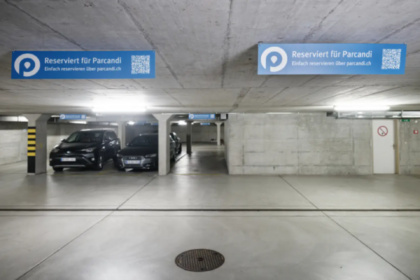
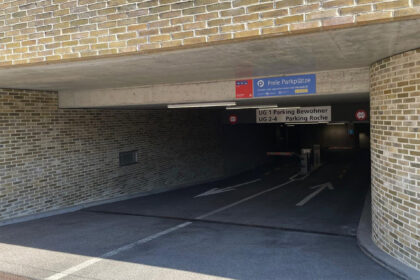
With Parcandi, Corsin’s vision was to solve the parking problem, or rather to reinvent parking. There are many paradigms or conceptual boundaries in this area:
- “My parking space is mine” vs. “I always have a parking space when I need it”
- Digital business models are based on apps, as much data as possible and freemium models
- Founders are 25-year-old prodigies and not 40-year-old fathers with three children
With Parcandi, we did pretty much everything differently from the others.
- No registration
- No app
- No own parking lot
- No cash – NEVER!
- No ticket
- No local solution
- No limit
- No choice of parking time and no penalty for parking too long
At any time and without compromise
- 24/7 direct help for users
- No searching for a parking space thanks to advance reservation
- No stress
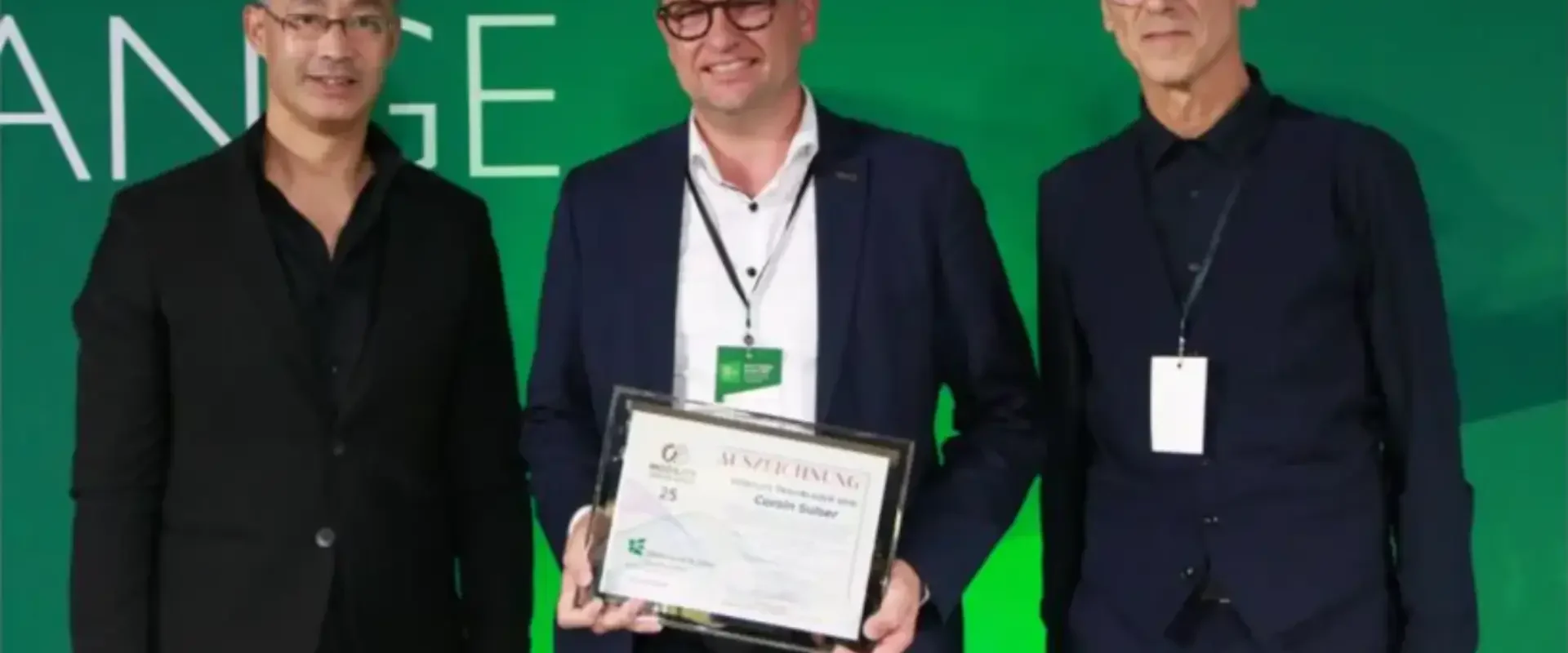
This courage to find a new dominant design for the various use cases around the “simple” topic of parking has now been rewarded with the Mobility Trailblazer Award 2025, an award for personalities who are driving the mobility turnaround in the DACH region with courage, innovative strength and impact.
With Parcandi, Dr. Corsin Sulser is finding a new solution to an everyday mobility problem: parking spaces are shared digitally instead of being built from scratch. The platform reduces congestion, search traffic and emissions in cities. At over 40, Sulser took the plunge from corporate manager to founder. His IoT-based approach shows how efficiency and sustainability can work together. Parcandi visibly improves the quality of urban life.
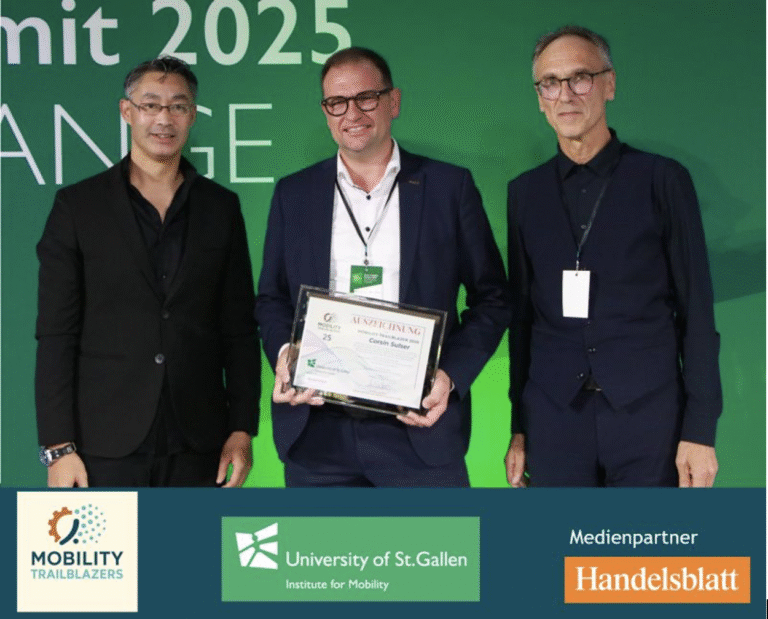
And as Prof. Andreas Herrmann and Dr. Philipp Rösler summed up in their speech:
People and companies who want to make a difference are often ridiculed at first, then publicly questioned and criticized if they succeed. It takes courage to carry on regardless.
And rewarding this courage and perseverance with an award will hopefully lead to a multiplier effect. In our opinion, the 20 awardees are also role models for
– young people who may now be encouraged to realize their start-up idea.
– established employees of large companies who may now be able to stand up even louder for their ideas and values.
– For politicians who are committed to (mobility) initiatives that make sense in the longer term, without only having their next re-election in mind.
Congratulations to all Trailblazers who are trying to change the world with courage, determination and the right amount of naivety!